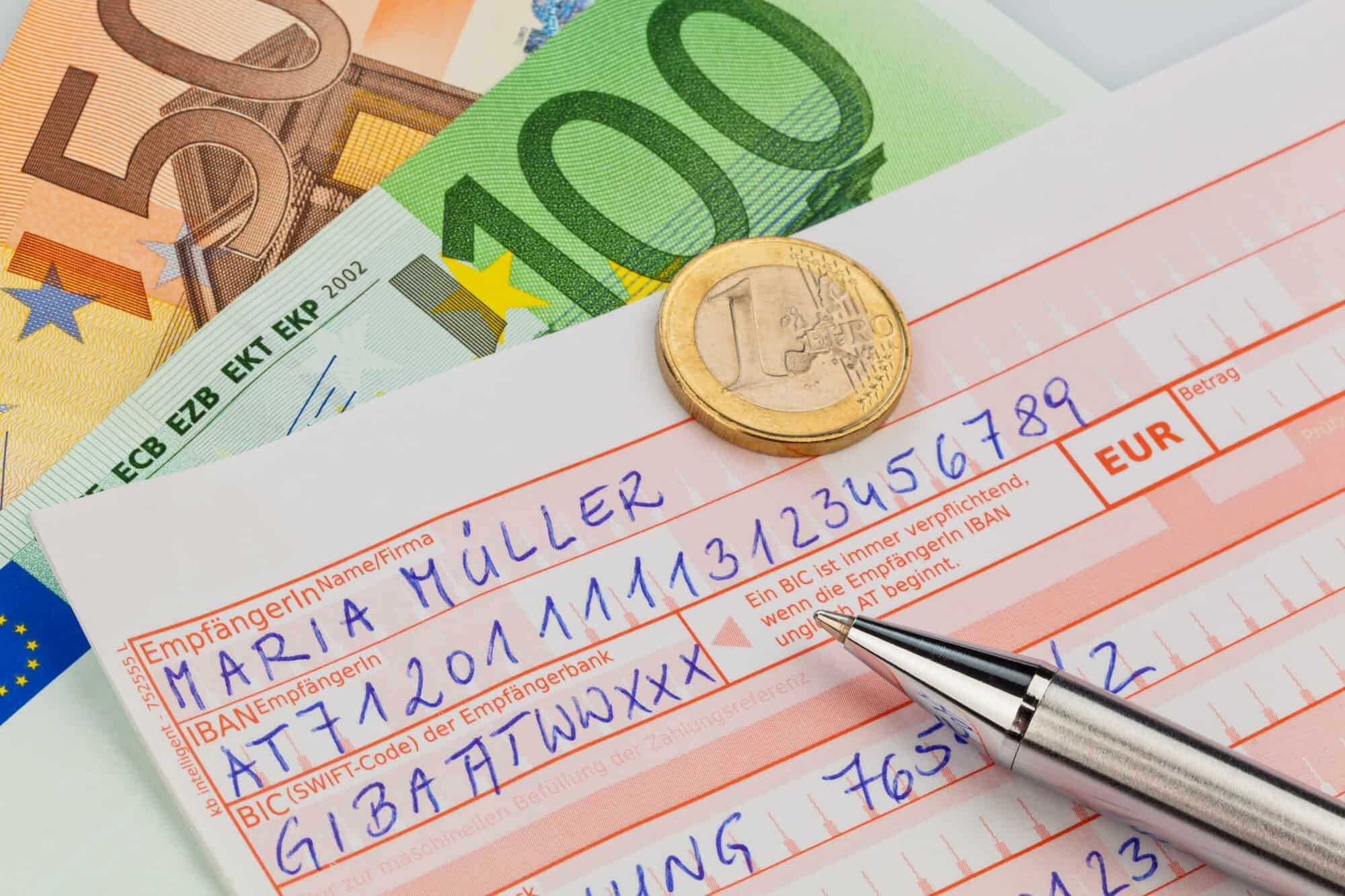
What a SWIFT code is
A SWIFT code, also called a BIC, is a string of 8 to 11 characters that identifies a specific bank in international transfers. SWIFT stands for the network banks use to send secure payment messages to one another worldwide.
The code tells the payment system which bank and branch should receive the money. It is used in most countries, including for transfers to and from the United States.
Think of the SWIFT code as the address of the bank. It gets the money to the right institution, but on its own it does not point to an individual account.
What an IBAN is
An IBAN, or International Bank Account Number, identifies a specific account at a specific bank. It can be up to 34 characters and begins with a two-letter country code, followed by numbers that represent the bank and the account.
IBANs are widely used across Europe, the Middle East, and many other regions. The United States does not use IBANs for domestic transfers, relying instead on a routing number and account number.
If the SWIFT code is the address of the bank, the IBAN is the address of the exact account inside it. That is why many cross-border bank transfers ask for both.
When you need each one
Which identifiers you need depends on the destination country and how your recipient receives the money.
For a bank transfer to a country that uses IBANs, you will often need the recipient's IBAN and the bank's SWIFT code together. The SWIFT code routes the money to the bank, and the IBAN directs it to the correct account.
For countries that do not use IBANs, a SWIFT code plus a local account number is common. Requirements vary, so it is worth confirming exactly what your recipient's bank asks for.
You do not always need these details to send money abroad. With MoneyGram, you can send for cash pickup, mobile wallet, or debit card delivery without a recipient bank account, across more than 200 countries and territories. To see how a full transfer works, read what is a remittance. For payments funded from a US bank account, it also helps to understand ACH transfers.
Common questions
What is the difference between a SWIFT code and an IBAN?
A SWIFT code identifies the bank in an international transfer, while an IBAN identifies the specific account at that bank. Many cross-border bank transfers use both together: the SWIFT code routes the money to the correct bank, and the IBAN directs it to the right account.
Does the United States use IBANs?
No. US banks do not use IBANs for domestic transfers. Instead, they use a nine-digit routing number to identify the bank and a separate account number for the account. For transfers into or out of the US, a SWIFT code is typically used to identify the American bank.
Do I need a SWIFT code or IBAN to send money with MoneyGram?
Not necessarily. You need bank identifiers only when sending directly to a recipient's bank account in a country that requires them. If your recipient collects cash at an agent location, or receives money in a mobile wallet or on a debit card, those bank details are not required.
Send money your way
Send to a bank account or choose cash pickup, mobile wallet, or debit card delivery.
Send now